


Right now, human rights are under threat in 116 of the world’s 195 countries. From discussions in the US about imminent nuclear weapons testing and genocide in Gaza to famine in Sudan and Russia’s military invasion of Ukraine, in a changing context we have to constantly rethink what activism and human rights protection might look like.
In our search for examples, we are accustomed to looking to the post-Soviet and European space — but there are others. In Uzbekistan, a country between the South and the North, we can turn to practices outside the usual narratives and look at how activists in the Global South work. People are resisting authoritarianism and repression in former colonies, in countries experiencing genocide, in countries with ongoing famine… Perhaps we ourselves are closer to the South than to the North?
Together with fellow journalists from Uganda, South Africa, Pakistan, India, Mongolia, El Salvador, the Philippines, and Taiwan, Sarpa attended International Civil Society Week in Bangkok, one of the world’s largest civil society events, bringing together more than a thousand activists and human rights defenders from Asia, Africa, and South America.
It was amazing to record the stories of the conference participants and see how similar their stories were to ours — from a human rights activist from Lebanon facing the consequences of Islamophobia to a journalist from Nepal who ended her career in television to start a social media project.
Meet activists from Lebanon, Beirut, the Philippines and Nepal, and learn about their inspiring work and experiences.
Jihod Nammour: ‘Never Shout My Name at the Airport’
a story told at the living library
Jihod Nammour was born and raised in Lebanon. When choosing a name for their newborn son, Jihad’s parents wanted to choose a name that would be secular, free from religious influence.
In his country, the name Jihad is rare, but it has no negative connotations, meaning “great effort” and can be applied to various activities. The word has similar meanings in other countries of the Global South, including those where the population is not Muslim. In Indonesia, for example, many people use this word to say that they are making a great effort for something. You can “do” it for your family, and it will mean that you care for your relatives and work hard. And in Morocco, it is actually a woman’s name.
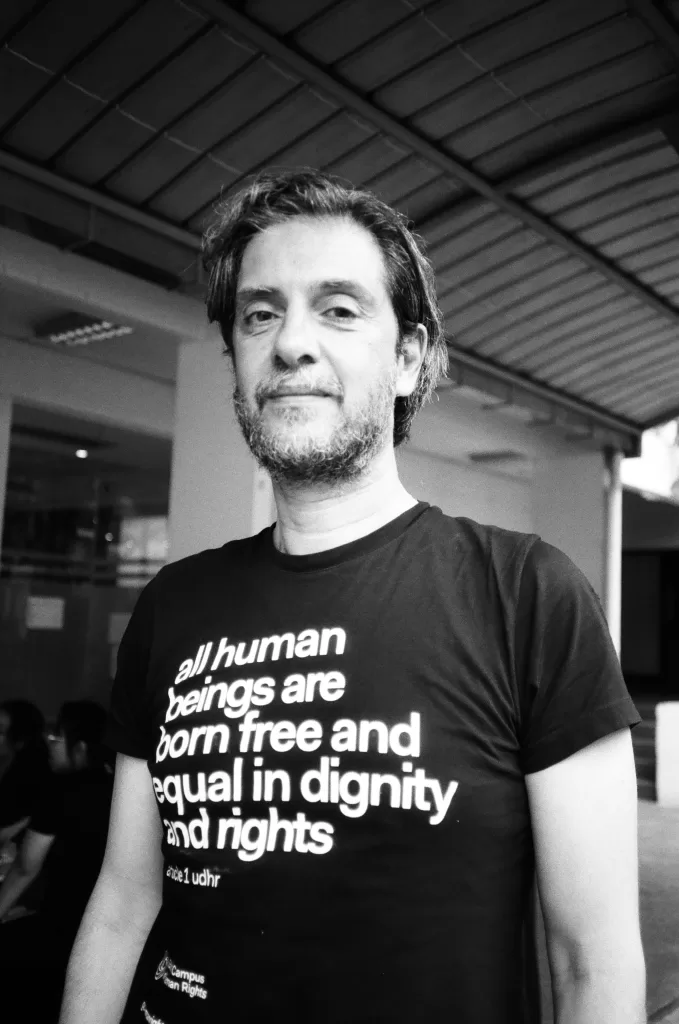
Until Jihod moved from Lebanon, he was unaware of the problems associated with his name. But just as he was moving to Beirut, religious groups began talking about jihad, and people started associating the word with violence.
He jokes that he is almost 50 years old and every time he travels, people perceive him as a retired terrorist. Almost every time at airports, train stations, and anywhere else where he has to show his documents, Jihad runs into problems.
He recalls how 10 years ago, the train he was on, along with all the other passengers, was detained at the station because 15 police officers began questioning him about his name. People always assume that he is Muslim and comes from a conservative religious family, although this is not the case. He says that as a teenager, he talked to his parents about his name, of course — as he did about many other things, like all teenagers. But he never wanted to change his name. Jihad notes that he came from a privileged family and rarely had to apply for jobs through advertisements, mostly finding work through connections, so his name was never an issue.
He is not just his name. For example, he has more than 300 plants growing at home! He loves taking care of them. Now the human rights activist works at the Global Campus of Human Rights, based in Beirut, and jokes that if he is waging any kind of “jihad,” it is only in the field of human rights.
↗ Global Campus of Human Rights
Gardika Bajracharya: Interweaving Journalism and Activism in Nepal
Gardika was born in the heart of Kathmandu within a Newar community where daughters often face stricter limitations on freedom and mobility compared to other castes. These restrictions were not related to government policy, but rather came from family concerns — cases of sexual violence were common in Nepal at the time, and her parents believed limiting her movement would keep her safe. Instead of socializing on the outside, she was encouraged to spend time with friends at home.
After graduating from school, Gardika decided to become a journalist, but her family was hesitated — such work meant that she would often meet people and returning home late. Instead, her family wanted her to join the family business. Determined to follow her own path, Gardika chose to work in television despite their concerns.
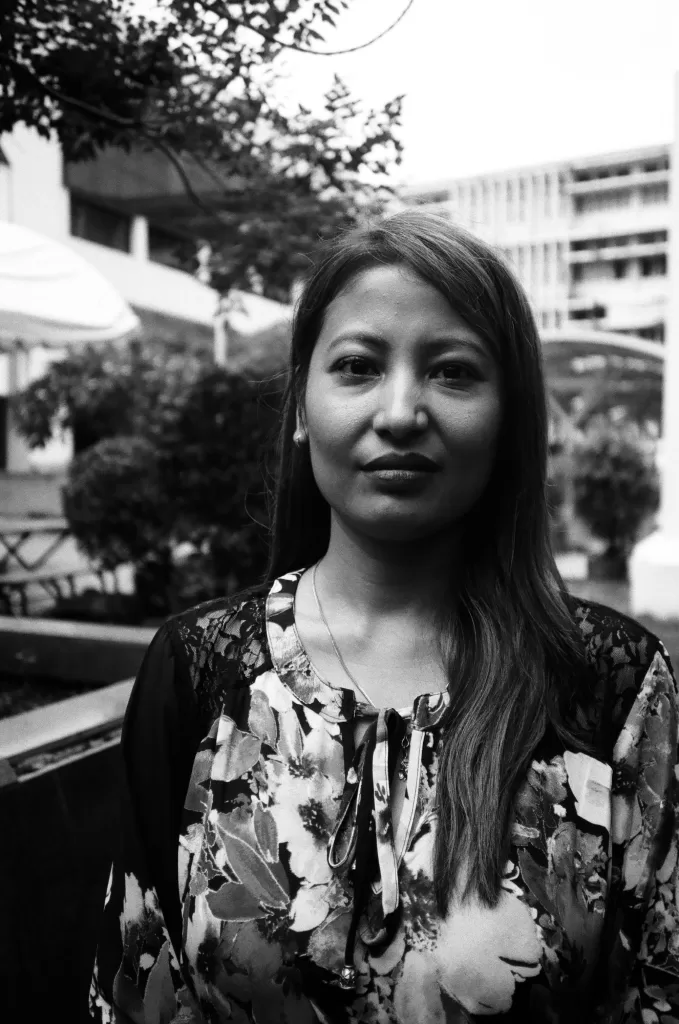
Five years into her television career, she grew tired of what she was doing — most of the stories were about politics rather than social issues. Gardika enrolled in a master’s program and chose to focus on Gender Studies.
With years of experience in journalism, Gardika felt she had learned a great deal and was well-informed. However, her true turning point came during an assignment to interview women in a village. There, she saw first-hand the challenges rural women—domestic violence, having to do everything with their husbands’ permission, reproductive violence, where women pressured to keep giving birth until they had a son. These experiences revealed the severe inequality and discrimination women face in Nepal. These new insights sparked her interest in working on women’s human rights. She began to question why women and girls faced so many restrictions, inequality and domination and her search for answers led her to organizations working on women’s human rights.
Coming from a relatively privileged urban family in central Kathmandu, she realized she wanted to do something for these women and decided to become a social worker, though her parents were initially unconvinced due to the fieldwork and overnight travel the job required. she stayed committed to her path. With time, she was able to help her family understand and eventually accept her career choice.
Over time, as her family members began to see her work on social media and recognized her dedication to human rights, particularly women’s rights, their perspective gradually changed. Her economic independence, took on equal responsibilities at home, shared her every day work learning and experience, this helps to build a trust and their perception towards her changed further.
Since 2020, Gardika has been part of The Story Kitchen, where she works as Program Lead and Head of the organization. She often points out that even a simple online search reveals how Nepal’s historical documentation centers mostly on men, leaving women’s contributions invisible and unrecognized. Deeply affected by this imbalance, she has made it her mission to amplify the voices of diverse women whose stories have been suppressed by social structures. With a blend of journalism and activism Gardika continues intensified her journey of advocating women’s rights.
Dakila: True Revolution Begins in the Imagination
The DAKILA collective welcomes guests with music and refreshments: dried mango, spicy anchovies, banana chips… At the workshop “Activist Potluck — What do we Bring to the Table?” participants were invited to bring treats from their countries, but if they didn’t have any, that was okay — they could simply share their experiences.
Potluck — or the culture of sharing food — is especially strong in the Philippines. All guests bring something to the table, either homemade or bought on the way, and every dish is appreciated. It’s a way to get together without burdening one person with cooking for everyone.
The DAKILA team suggests looking at the concept of “potluck” as a metaphor for civil society. Every experience, even a small one, is important when we come together.
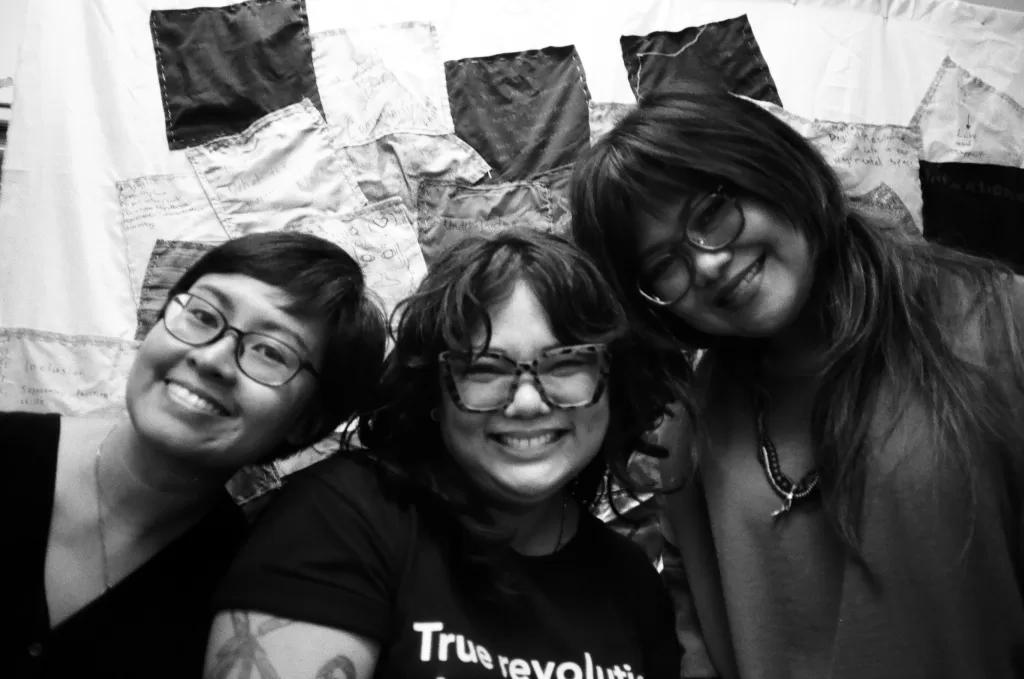
DAKILA encourages participants to talk about their practices and experiences at several tables with refreshments: “art,” “academia,” “youth culture.” What can each participant bring to this table? If this were a kitchen, what role would you play in it? Who is participating in this party—and who was not invited?
DAKILA organizes these and similar events, expanding the boundaries of activism through art practices. The co-founders call their organization the Philippine Collective for Modern Heroism. They have redefined the concept of modern heroes and, through their events, help other Filipinos to “awaken” their civic consciousness, learn about human rights, and become active participants in social change.
Their Active Vista festival, which ran from 2008 to 2016, was held in 20 cities and screened 60 films on the theme of human rights. In 2015, the Active Vista program expanded its reach with the Bayani Ba’To? traveling exhibition on history and heroism. As part of its tour, the festival collaborated with 40 schools, engaging more students—often from very low-income communities—in discussions about history, heroism, and human rights. After becoming an institute in 2016, Active Vista holds the annual Active Vista Human Rights Festival and expands its reach through events in Manila, Rizal, Laguna, Bacolod, Iloilo, Cebu, Dumaguete, and Cagayan de Oro.
💥 This material was prepared as part of the Media Fellowship program run by CIVICUS, a global alliance of civil society organizations and activists.